
Replacing Old Silver Fillings
in Woodstock, GA
If your silver fillings were placed decades ago, you’re in the cohort that’s starting to see them age. Straight talk: most aren’t emergencies, some are, and a careful look tells the difference. We’ll show you which fillings need to be replaced, which ones don’t, and what the modern options actually look like, with trade-offs and costs in writing before anything begins.
Sign 1: Pain When You Bite
When an old amalgam wedges the tooth, biting pressure feels off, a dull ache, a sharp pop, or pressure that lingers after the bite. New biting pain on an old filling is worth a same-day look.
Sign 2: Cold or Sweet Sensitivity
When a filling's seal begins to fail, temperature and sugar reach the nerve. Sharp, brief sensitivity that's new, or worse than it used to be, is the early warning.
Sign 3: A Visible Crack
Hairline lines in the metal, or in the tooth around it, are how old amalgams quietly fail. If you can see it in the mirror, it's time for us to look at it.
Sign 4: A Dark Line at the Edge
A dark line or gray shadow tracing the edge of an old filling can be a sign of leakage, and quiet decay starting underneath where you can't see it.
Sign 5: A Rough or Chipped Edge
Run your tongue across the tooth. If you feel a sharp edge, a notch, or a piece that's broken away, the filling has lost integrity and needs to be evaluated.
Sign 6: A Bad Taste That Returns
A metallic taste or odor that keeps coming back, even after brushing, can mean a filling is leaking or bacteria are getting underneath. It's worth checking.
Option: Tooth-Colored Composite
A bonded, mercury-free, color-matched filling. The right choice when there's enough healthy tooth structure left to support it, most often the conservative path.
Option: Ceramic Onlay or Inlay
A custom-fitted ceramic restoration bonded to the tooth. Best for larger restorations where a full crown is more than the tooth actually needs.
Option: Custom Dental Crown
When the surrounding tooth is weakened, cracked, or supporting a large old amalgam, a crown protects the whole structure. More common for 55+ patients than people expect.
When We Wait: Sealed Margins
If the seal is intact and bitewing X-rays show no decay underneath, the right call is usually to monitor, not to drill. We'll document it and watch it at each visit.
When We Wait: No Symptoms
No pain, no temperature sensitivity, no visible failure? A stable old filling rarely needs to be replaced. We'll tell you that clearly.
When We Wait: Still Doing Its Job
Removing a sound filling means more drilling, more tooth structure lost, and a newer restoration that may not last longer. If it's working, that trade isn't worth it.
Our Approach: We Map Every Restoration
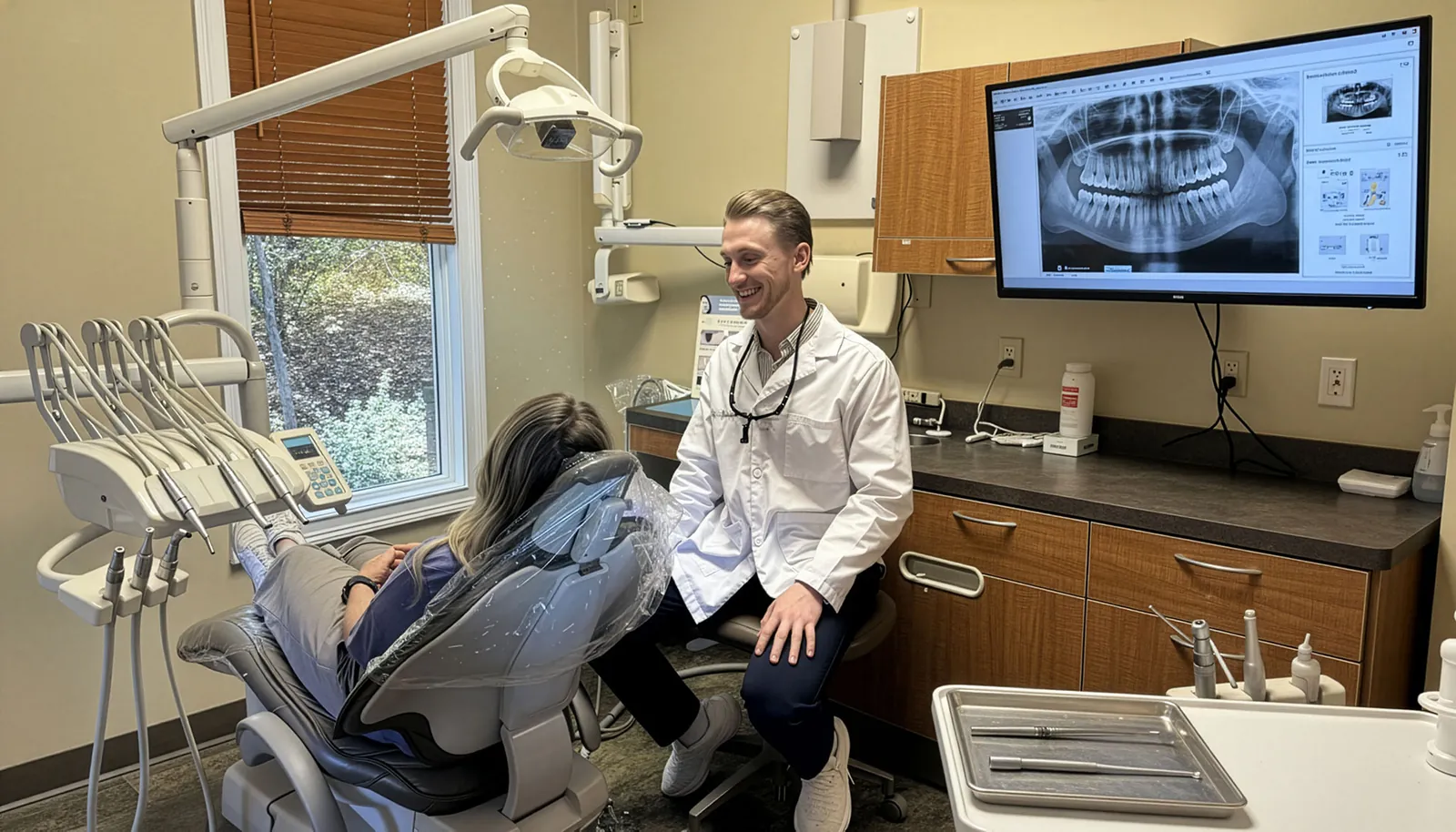
Photos, bitewing X-rays, and a careful exam. We document every old filling so you and Dr. Finnegan are working from the same picture.
Our Approach: We Rank Them
Three honest buckets: clearly failing, watch closely, stable. We don't try to replace everything at once. Measured pacing protects your tooth structure and your budget.
Our Approach: Written Costs, Measured Pacing
You'll see the recommendation, the alternatives, and the cost of each option in writing, before any drilling. Honest guidance, no pressure either way.