
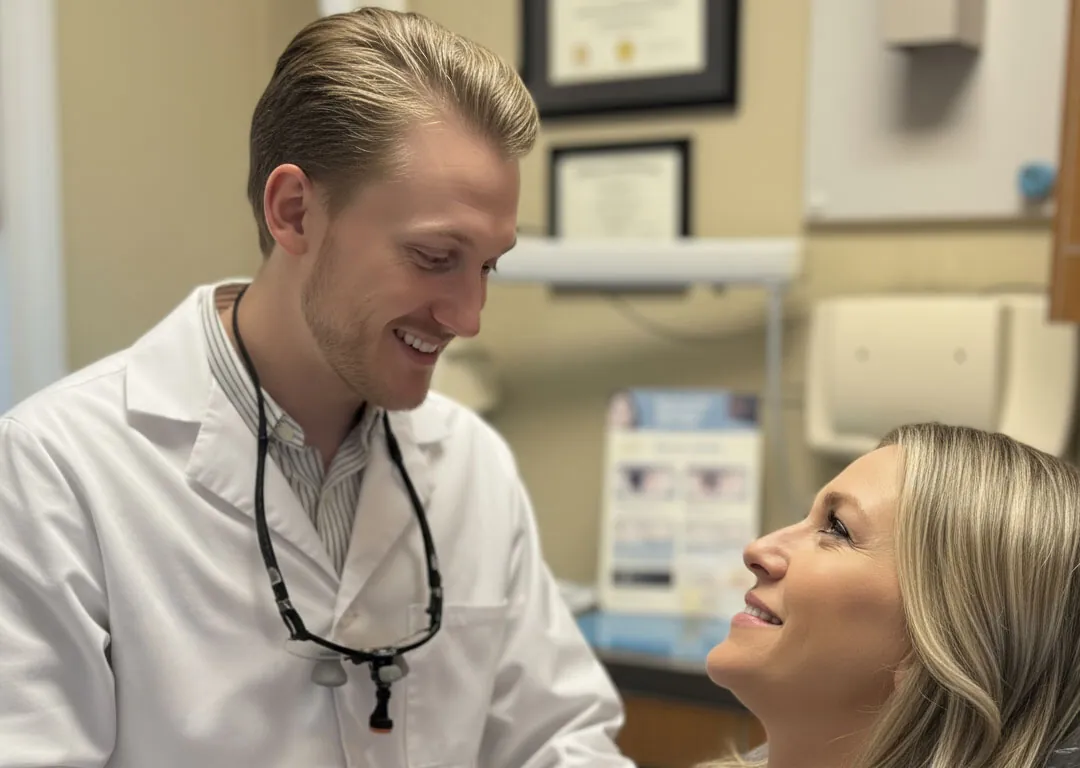
Porcelain Veneers in Woodstock, GA
Veneers can change the way a smile looks in a way that feels natural rather than overdone. They are a real treatment, not a quick fix, and the right candidates love the results for years.
At Magnolia Smiles in Woodstock, Dr. Finnegan plans veneers carefully. We listen first, look at your full bite and gum health, and talk honestly about what veneers can and cannot do for your teeth. If a more conservative option fits better, we will say so. If veneers really are the right call, we walk you through the design, the timeline, and the cost in writing before anything is started.
What are porcelain veneers?
Porcelain veneers are thin, custom-made shells that bond to the front of your teeth. They are crafted in a dental lab to match the shape, shade, and finish you and your dentist plan together. Once bonded, they look and function like natural tooth surface.
Porcelain is the material of choice when you want a long-lasting cosmetic change. It resists most everyday staining from coffee, tea, and wine, and it reflects light in a way that closely mimics natural enamel.
Veneers can correct things whitening, alignment, or bonding cannot reach on their own, like chips, narrow teeth, uneven edges, mild crowding, or persistent discoloration. They are a commitment, though. Because a small layer of enamel is shaped to make room for the porcelain, veneers are considered a permanent change.
When porcelain veneers make sense
Veneers are a strong fit when you want to address several cosmetic concerns at once and you have healthy teeth and gums to start with. Common reasons patients consider veneers include:
- Chipped, worn, or uneven front teeth
- Discoloration that does not respond to whitening
- Gaps you want to close without orthodontics
- Mild crowding or rotation in the smile zone
- Old bonding that has stained or worn down
- Teeth that look short or out of proportion
Veneers are not the right answer for every situation. Active gum disease, untreated decay, heavy grinding, or significant bite issues need to be addressed first. Sometimes whitening, bonding, or aligners give you the result you want with less commitment. We will tell you which path makes sense.
Your veneer options at Magnolia Smiles
Traditional porcelain veneers
Traditional porcelain veneers are the most versatile option and the one most patients picture when they hear the word veneer. A small amount of enamel is shaped, impressions or digital scans are taken, and a lab crafts each veneer to your exact specifications. Final veneers are bonded into place at a second visit.
This approach works well when teeth need shape and color changes, not just color. The trade-off is that the enamel reduction is permanent.
Minimal-prep veneers
When your starting teeth are well aligned and you only want small changes, minimal-prep veneers may be possible. These require less enamel removal and sometimes none at all. They are not right for every smile, but when they fit, they are a more conservative option.
Single-tooth veneers
Not every veneer case involves a full smile. Sometimes one front tooth has a chip, an old bonding repair, or a shade mismatch that bothers you. A single veneer can address one tooth while we match the shape and color to your existing smile.
Smile preview and design
Before any tooth is prepared, we walk through a smile design. That can include digital previews, shade selection, and a conversation about shape. The goal is no surprises on the day veneers are bonded.
Related at Magnolia Smiles: Patients considering veneers often compare the full range of cosmetic dentistry options at Magnolia Smiles, dental bonding, or professional teeth whitening.
Why patients choose Magnolia Smiles for veneers
Conservative, only-what-you-need prep
Clear options and costs in writing
Whole-smile, not just one tooth, thinking

What to expect during veneer treatment
Veneers usually take two main visits, plus a consultation to plan the smile. At the first visit, we shape the teeth, take scans or impressions, and place temporary veneers so you leave the office looking close to your final result.
At the bonding visit, we try in the porcelain, check fit and shade, and bond each veneer securely. We then check your bite to make sure everything feels natural when you chew, talk, and smile. If you grind your teeth, we usually recommend a night guard to protect your investment.
Your dentist, Dr. Zack Finnegan
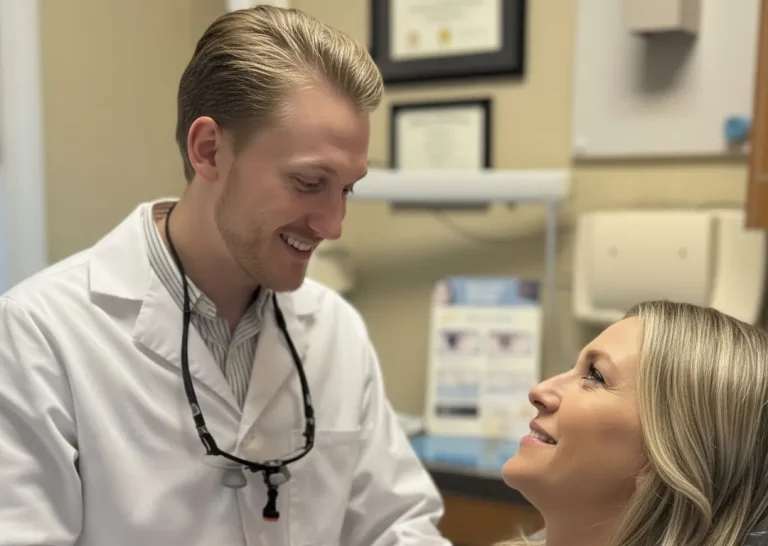
Dr. Finnegan earned his DMD at the University of Louisville School of Dentistry and has cared for patients in Woodstock since 2024. At every visit he shows you what he sees on screen, explains your options in everyday words, and puts costs in writing before anything begins. If a specialist is the better fit, he will tell you and help arrange it.
Insurance and cost, made clear
Magnolia Smiles is out of network with every dental insurance plan. That does not mean you can’t be seen here. It means your plan pays you back instead of paying us. Here is how paying for care works.
Use your PPO benefits
Pay at your visit and we give you the paperwork your plan needs. You submit it, and your plan reimburses you based on your out-of-network benefits. How out-of-network works
Membership instead of insurance
Adults $465 a year, kids 14 and under $415. Cleanings, exams, and X-rays included, with 10% off basic and major care and 5% off cosmetic care. See the plan
Costs in writing first
You get a written estimate before anything is scheduled. All major cards, HSA, and FSA accepted, plus CareCredit financing for larger treatment. See typical costs
Frequently asked questions
Well-made and well-cared-for porcelain veneers commonly last 10 to 15 years, and many last longer. Daily habits, grinding, and routine cleanings all play a part. If you wear a night guard and keep up with regular visits, your veneers can stay beautiful for a long time.
Traditional veneers are considered permanent because a small layer of enamel is shaped to make room for the porcelain. Minimal-prep veneers remove less enamel and are sometimes reversible. We will tell you which option fits your teeth before any tooth is touched.
Cost depends on how many veneers you choose, the complexity of the design, and whether other treatment is needed first. We will give you a written estimate after your consultation so you can compare options and plan with no surprises.
Most patients adjust within a few days. We check your bite carefully and shape each veneer so it feels natural when you eat, talk, and smile. If anything feels off after bonding, small adjustments are easy.
Yes. Magnolia Smiles is out of network with all dental insurance plans, and you can still use your PPO benefits here. You pay at your visit, we give you the paperwork your plan needs, and your plan reimburses you based on your out-of-network benefits. Here is how out-of-network care works. No insurance? Our membership plan includes cleanings, exams, and X-rays, plus 5% off cosmetic care. We do not accept Medicaid.
Book online any time at our scheduling page, or call (770) 384-8505. The office is open Monday through Thursday 8 a.m. to 5 p.m. and Friday 8 a.m. to 3 p.m. at 650 Claremore Professional Way, Suite 200 in Woodstock. At your veneer consultation, Dr. Finnegan examines the area, shows you what he sees on screen, and gives you written options and costs before anything is scheduled.
Tell us. Dr. Finnegan explains each step before he does it, uses local anesthetic for treatment, and you can ask to pause at any time. We do not offer sedation at Magnolia Smiles, so if a procedure is better done with sedation, we will tell you up front and talk through your options.
Veneers suit healthy teeth with chips, stains, gaps, or uneven shapes that whitening or bonding cannot fully fix. Active decay or gum disease needs treatment first, and heavy grinding may call for a night guard or a different option. An exam tells us which path makes sense.
Why patients love Magnolia Smiles

 karl wentzel
Trustindex verifies that the original source of the review is Google.
As a new customer of Magnolia Smiles, I am very satisfied with the service provided by Dr. Finnegan and staff. During the service it was determined that one tooth needed a root canal. I decided to get it done now and Dr. Finnegan contacted Cherokee Endodontics and secured a same-day appointment. Overall, this was exceptional service. Michelle PittardAlways an easy experience with friendly staff.
 Sabrina k TurnerIf I could give 10 stars, I would! My experience at Magnolia Smiles was absolutely amazing from start to finish. I was greeted by Jessica who did nothing but greet me with pure joy. What a beautiful soul she is. Then Laura, the office manager, was so polite and kind and her smile is truly contagious. After my cleaning, Dr. Finnegan came in for my exam and explained everything in depth. He showed me my X-rays so I could actually see and understand exactly what needed to take place. I have never had a doctor take the time to explain things so clearly. Julia, his assistant, is just a beautiful, kind soul in every way. This office is truly one of a kind. The whole team makes you feel welcomed, cared for, and at ease. I will recommend Magnolia Smiles to anyone looking for the best dental office in Woodstock!
 S MWonderful staff, friendly, professional, and each Person totally delightful !!!!!!
 Melissa BearyAlways welcomed with a friendly smile! Take their time with me and my family. I will recommend them to anyone who ask about my dental care.!
 Beth MercerDr. Finnegan’s attention to detail and commitment to perfection goes beyond expectations and is reflected by everyone on his team. Thank you all for making dental visits so pleasant.
 Carlena BrayEveryone was very friendly and helpful. They made us feel at home and answered all our questions. We were not rushed and were treated like family.
 Angie SloverDr. Finnegan and his staff are amazing!! From the minute I walked in and was greeted with a smile by Sabrina I knew it was an inviting and happy place. I had to have a filling replaced and Dr. Finnegan was so gentle and explained everything throughly that I knew exactly what was coming next. Thank you to him and all of his staff for making this such a positive experience.
 Ingrid SabahOn one of my worst days and in excruciating pain, I stumbled upon the dream team at Magnolia Smiles and was immediately met with incredible empathy, understanding, and first-class care. In less than an hour, I went from unbearable pain to big smiles—with a specialist referral and appointment already secured. Sabrina, if you’re reading this, thank you. You are truly a blessing! Dr. Finnegan, you’ve set a new personal standard for compassionate dental care, and I couldn’t be more grateful. I would start and end a search for a dental practice at Magnolia Smiles! Thank you, thank you, thank you ✨✨✨